
Bharat Cyber SolutionsCert-in & Empanelled Organisation
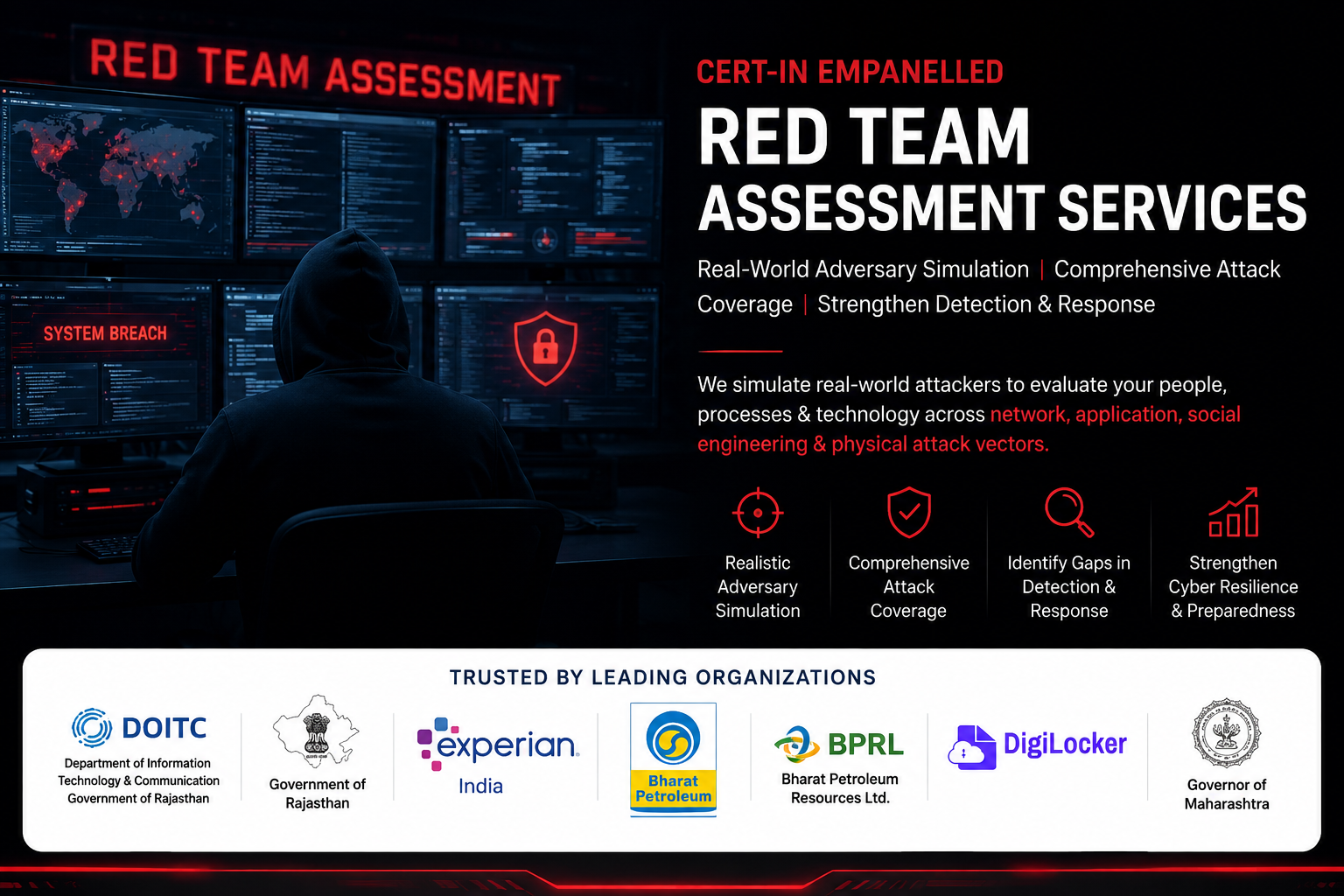
Bharat Cyber Solutions runs objective-driven Red Team engagements that mimic real attackers — chaining network, application, social engineering and physical vectors — to test whether your people, processes and technology can actually detect and stop a breach.
Hero image goes here
Replace with a red team / adversary simulation visual — e.g.hero-redteam.jpg
Client logo strip goes here
Drop in a row of client / partner logos — e.g.clients-strip.png

As a CERT-In empanelled organization, Bharat Cyber Solutions runs goal-oriented Red Team engagements — a covert, multi-vector simulation of a real adversary that tests whether your defenders can actually detect and respond, not just whether a vulnerability exists.
Unlike a standard VAPT, a Red Team exercise has a business objective — such as reaching a crown-jewel database or domain admin — and uses stealth, persistence and creativity to get there, exposing gaps across people, process and technology.
Common gaps a Red Team exercise uncovers:
Overview image goes here
e.g. an adversary simulation / attack-chain illustration —overview-redteam.jpg
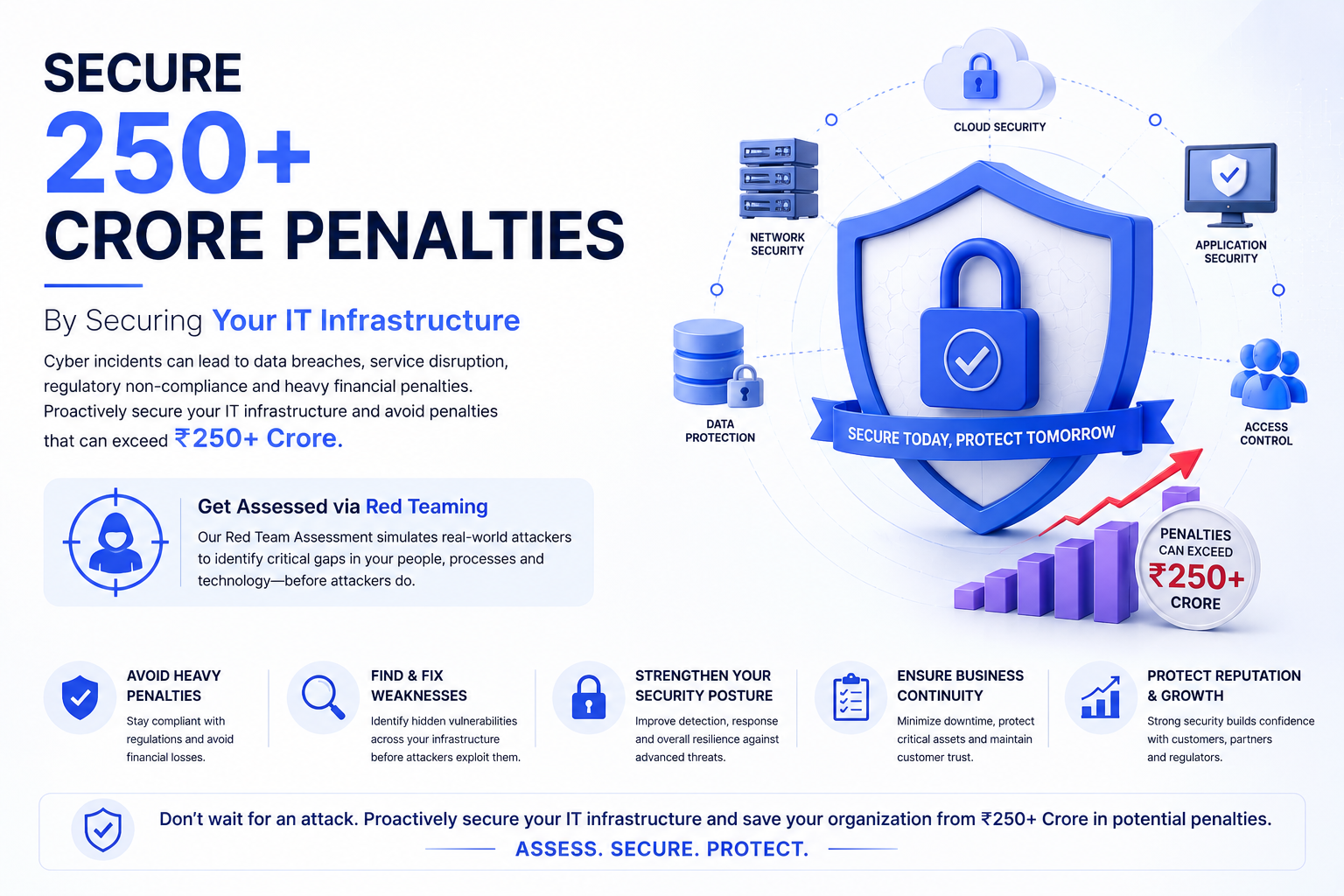
Our numbers reflect real engagements against live defenses — not just a checklist exercise.
Six outcomes every Red Team engagement is built to deliver, regardless of your sector.
See how a determined adversary would actually chain flaws to reach a business-critical objective.
Find out if your SOC and IR team can actually spot and contain a live intrusion.
Test susceptibility to phishing, pretexting and social engineering across your workforce.
Attempt real-world physical intrusion into offices, data centres and restricted areas.
Build a security posture that holds up against evolving, multi-stage attack techniques.
Align with CERT-In, RBI Cyber Resilience Directions and sector-specific regulatory expectations.
Attack-vectors image goes here
e.g. a covert/stealth attack-chain illustration —attack-vectors.jpg
Every engagement is objective-driven and scoped with you upfront — we agree the rules of engagement, targets and escalation path before day one.
No advance warning to your blue team — tests real-world detection and response exactly as it would happen.
Blue team is aware and works alongside us in real time, for faster knowledge transfer and tuning.
We start with a foothold already established, to focus the exercise on lateral movement and detection.
Every finding in our reports is classified by real-world risk and business impact, so your team knows exactly what to fix first.
The most dangerous class of findings — requires an immediate remediation plan and priority action.
Serious risk to the organization — also demands immediate attention and a clear fix timeline.
Meaningful but less severe than High or Critical — still important to remediate to strengthen posture.
Minimal immediate business impact, but worth addressing to harden overall infrastructure and process.
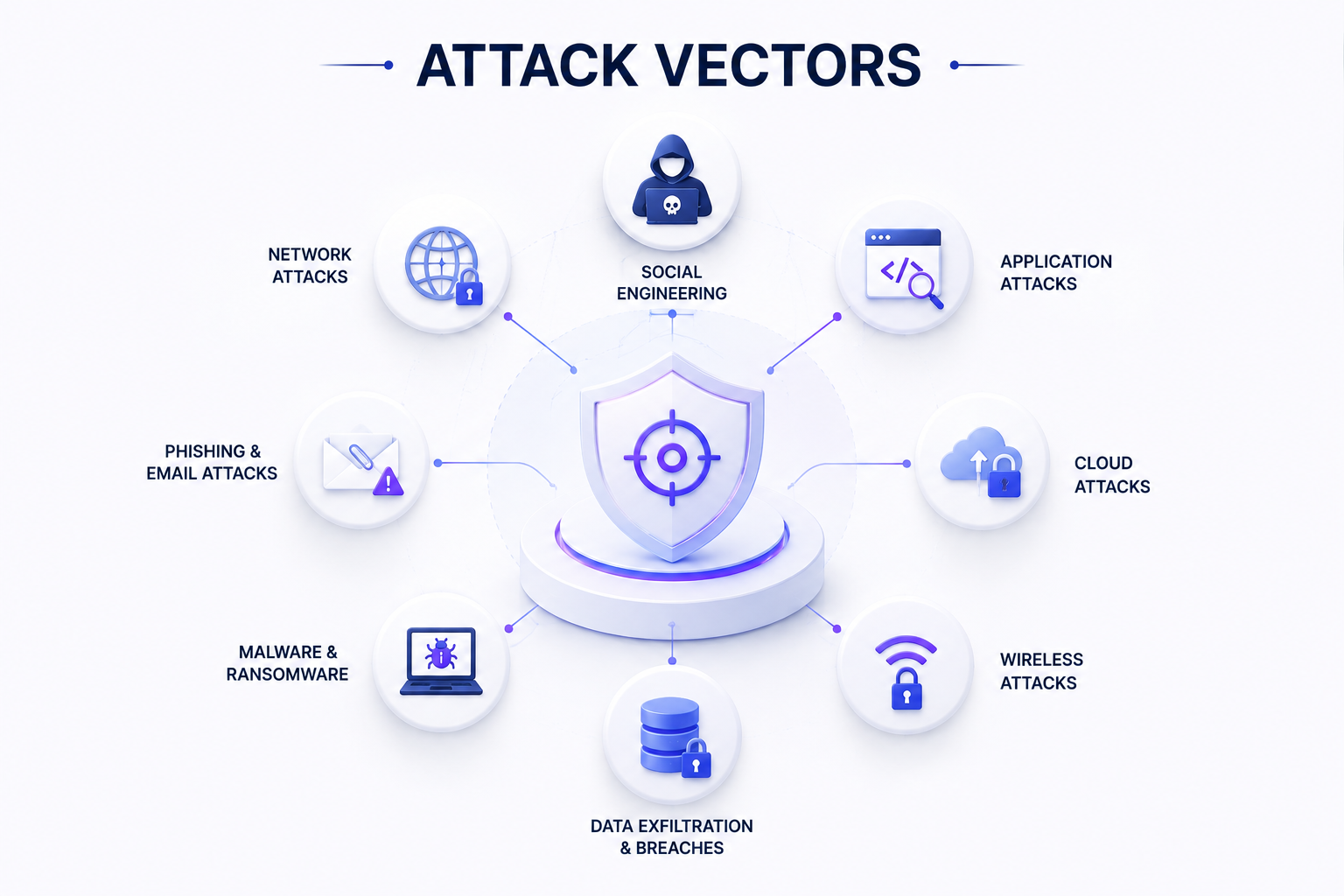
One team, every surface — so you're not coordinating multiple vendors for different parts of the attack chain.
External and internal network compromise, lateral movement and privilege escalation.
Exploiting exposed applications and APIs as an initial-access vector into your environment.
Phishing, vishing and pretexting campaigns targeting your workforce as a realistic entry point.
Attempts to gain unauthorised physical access to offices, server rooms and restricted zones.
A sample of what's covered under each vector during an engagement.
See the actual chain of weaknesses across infrastructure, applications and people an attacker would use.
Measure how quickly your SOC and IR team detect, triage and contain a live simulated intrusion.
Get a clear, evidence-based view of your security posture to prioritise risk and allocate resources well.
Align with CERT-In and RBI Cyber Resilience Directions expectations around resilience testing.
Fixing systemic weaknesses reduces downtime caused by preventable security incidents.
Regular testing signals a real commitment to protecting customer and partner data.
Findings feed directly into sharper, more effective internal security practices.
Simulated attacks show exactly how your defences would hold up under pressure.
Fixing issues proactively is far cheaper than absorbing a breach, fines and reputational damage.
"Why choose us" image goes here
e.g. your team / operations photo —why-us.jpg
A Red Team Assessment is a covert, objective-driven simulation of a real-world attacker, using network, application, social engineering and physical vectors to reach a defined business-critical target and test your detection and response capability.
A VAPT looks for as many vulnerabilities as possible in a defined scope. A Red Team engagement is goal-oriented, stealthy and multi-vector — it chains realistic techniques toward one objective and specifically tests whether your people and SOC can detect and stop it.
It's increasingly expected under frameworks like the RBI Cyber Resilience Directions for regulated entities, and is strongly recommended for any organisation that wants real assurance beyond a standard vulnerability assessment.
Common vectors include external and internal network compromise, web/API exploitation, phishing and social engineering, and physical intrusion attempts — scoped and agreed with you before the engagement starts.
An executive summary, the full attack narrative and kill chain mapped to a framework like MITRE ATT&CK, detection and response timeline observations, evidence for each stage, and prioritised remediation guidance.
That depends on your goals. Fully covert engagements test detection blind — only a small trusted group knows. Announced or purple-team engagements involve your blue team in real time for faster tuning and knowledge transfer.
A typical engagement runs 3 to 6 weeks depending on scope, number of vectors in play and how much reconnaissance and stealth is required, followed by reporting and a debrief session.
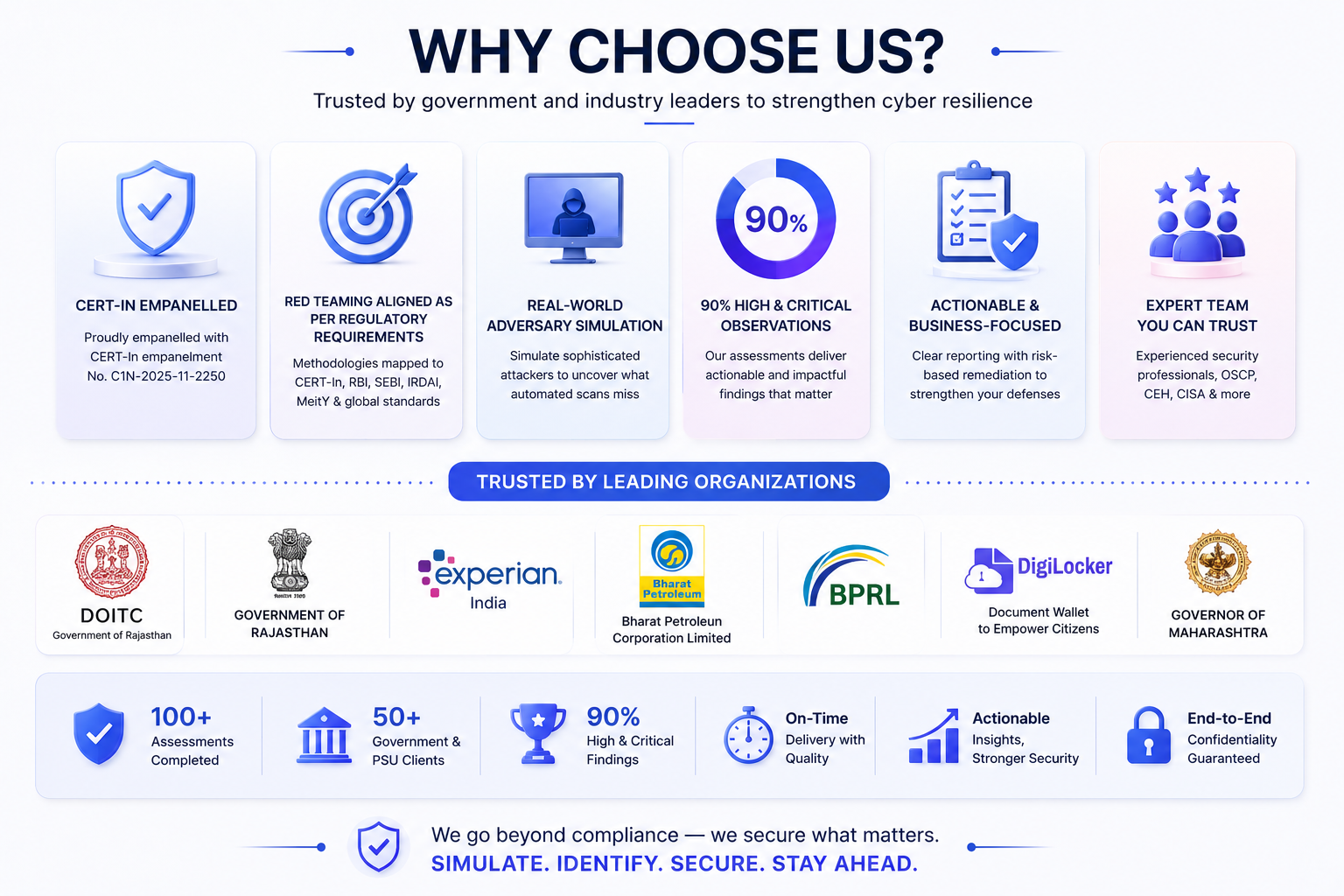
A CERT-In empanelled provider ensures your engagement is conducted by a trusted, vetted organisation following recognised industry standards, with proper handling of rules of engagement and evidence.
As a CERT-In empanelled security auditor, we run realistic, sector-aware Red Team engagements across network, application, social and physical vectors — backed by clear reporting, framework-mapped findings and real remediation support.
Fill out the form below and our team will contact you shortly.
No spam, no auto-dialler. A real security analyst reviews your scope first.